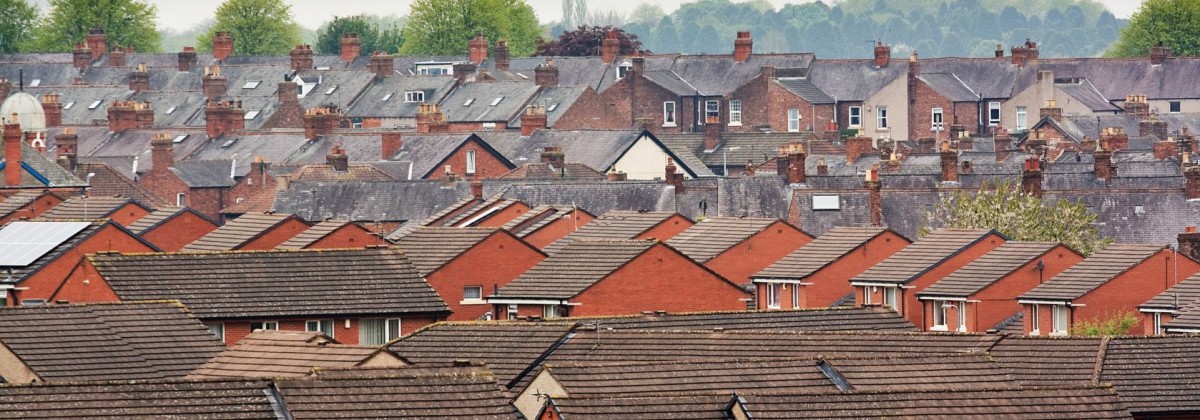
Migration Watch has long warned of the impact of mass, uncontrolled migration on Britain’s housing market. In January this year, the Ministry of Housing, Communities and Local Government published a response to concerns about a new government scheme to build houses for migrants:
“Reports today suggest new homes built in this country will be required to house arriving migrants.
This is scaremongering.”
Of course, anyone with a lick of sense understands that people need places to live; that if you have too many people, and not enough houses, excess demand will cause rents to rise; and high rents and house prices have many second and third order negative effects, such as making it harder for people to have children, save for a deposit, or benefit from social mobility. It is deeply concerning that our Ministry of Housing thinks it’s “scaremongering” to even discuss these effects.
While Britain’s housing crisis is national in scope, some areas are hit harder than others, as local authorities fail to build enough houses to cope with the enormous inflows we have seen since 2019, and in particular, under the so-called “Boriswave”. We are working on a deep-dive analysis of what the impact of migration has been on housing costs, broken down by area. Here is a sneak preview of the figures:
- In 2025, almost a quarter of non-London English local authorities (66/285) failed to complete enough houses to accommodate net international migration to their area – meaning that arriving migrants directly competed against existing tenants for scarce rental properties, driving up rents.
- Birmingham, England’s worst affected city outside London, built just 1030 houses despite needing 4410 just to house new arrivals, a net shortfall of 3380.
- Luton needed to build 1939 new homes to accommodate international migrants, but managed just 40, or a 98% shortfall.
- 14 non-London English local authorities not only failed to build enough houses to hit their MHCLG-imposed housebuilding targets, but had international migration of such extreme numbers that even hitting the target would not have been enough.
- One local authority, Derby, needs 1725 new houses every year to accommodate new migrants. It has a target of 906 new houses built per year. In the last financial year, it completed just 490 new houses.
The Ministry for Housing might say this is “scaremongering”; we say it is the consequence of a broken immigration policy that year after year, admits hundreds of thousands of migrants and asylum seekers without due regard for impact on housing, services or wider British society. Indeed, the rights of new arrivals often prevail over those of the resident population.
You may be interested in our wider analysis of international migration figures broken down by area, using figures published by the ONS this week. Net international migration accounted for 92% of England’s population growth in 2025, with marked regional differences as deaths outstripped births.
The distinction matters for anyone planning public services. School places, GP registrations, housing turnover, English language provision, and local authority caseloads respond to arrivals and departures, not to the net residual left after the two are subtracted. Planning on the basis of the net figure therefore systematically understates the demands actually placed on local infrastructure.