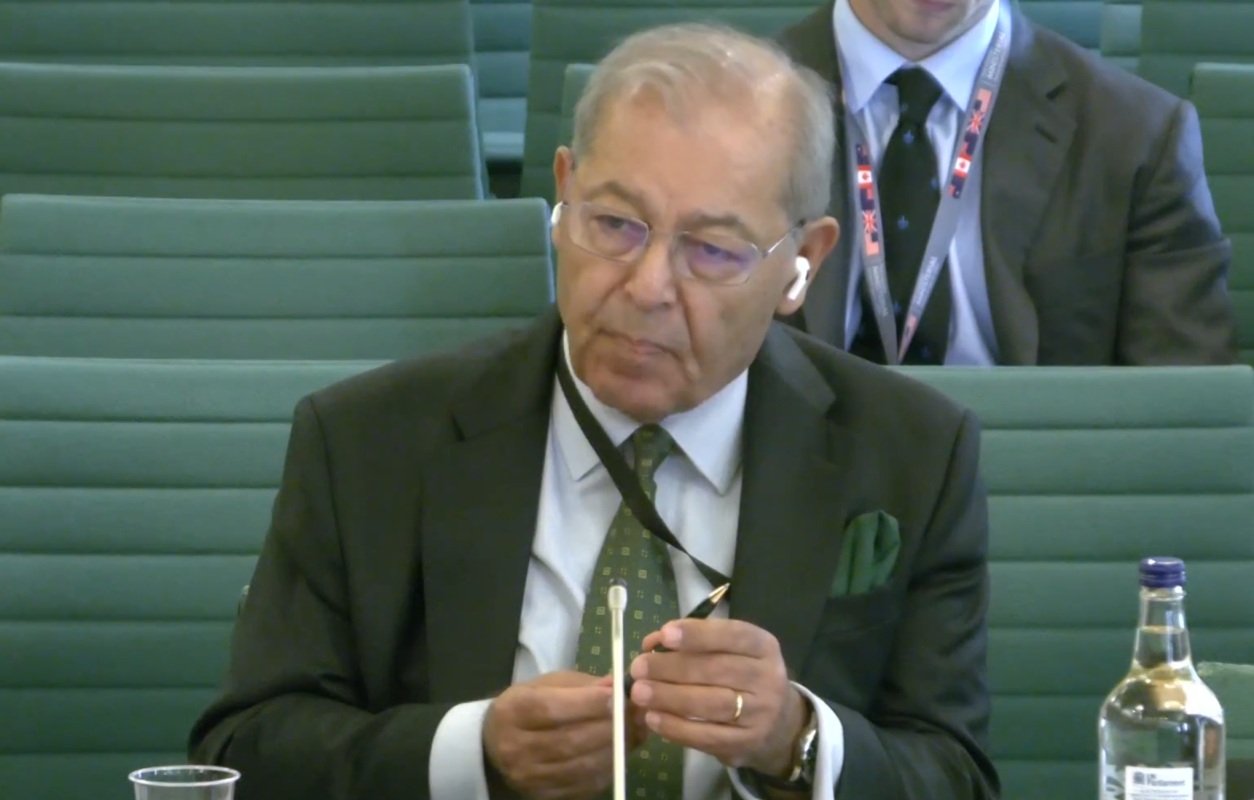
There was something revealing about our Chairman, Alp Mehmet’s, appearance this week before the Public Bill Committee considering the Government’s Immigration and Asylum Bill.
Immigration is one of the most serious failures of public policy in Britain over the past thirty years. Yet, despite the purpose of the Committee hearing being to scrutinise the Immigration and Asylum Bill 2026, some questions at times strayed from examining how the legislation would achieve the Government’s stated objectives of reducing illegal immigration and restoring confidence in the asylum system, and descended into political point-scoring.
When asked what evidence there was of measures that had proved successful in dealing with illegal immigration and reducing the number of asylum applications, Alp offered Australia, Denmark, Italy and the United States as countries that had succeeded in slowing or of almost halting the flow of illegal border crossings, adding little in the Bill came close to emulating the measures adopted by any of these countries. Denmark, for example, had confiscated valuables to help meet the cost of accommodating migrants; failed asylum seekers were held in camps pending removal; and measures had been introduced to prevent parallel societies from developing by limiting the proportion of migrants in any given area. There were also lengthy qualifying periods for indefinite leave to remain (eight years). None of this was in the Bill.
According to some reports, a number of countries, including Greece and Italy, had even turned boats back, while the United States had all but sealed its southern border and pretty much halted illegal border crossings along its border with Mexico.
The Member of Parliament for Glasgow South West, Dr Zubir Ahmed, challenged the reference to the United States by asking whether Alp was advocating a model in which “American citizens are being shot dead in the streets”. Alp was puzzled by Dr Ahmed’s question and its relevance to what had happened along the US–Mexico border, which had the desired effect. A government that demonstrates that unlawful entry will not result in indefinite residence creates a very different incentive from one that repeatedly proves incapable of, or unwilling to, remove those who arrive illegally.
As Alp told the Committee, securing the border is hardly an alien or un-British idea. Practical measures such as detention on arrival, rapid processing and the return of those with no right to remain were standard practice for much of the post-war period.
Between 2018 and June 2026, around 210,000 people were detected arriving by this route – more than the entire strength of the combined British armed forces.
Alp argued the Bill does not address the central incentive behind the boats: the expectation that reaching Britain gives an individual a strong prospect of remaining here for a very long time, whatever the eventual merits of his claim.
Dr Ahmed also suggested that leaving the European Union had reduced Britain’s ability to deal with the problem – this is, frankly, nonsense. Alp said, in practice, returns under the Dublin Treaty were few in number in either direction, often took months to arrange, we often took in more than went in the other direction, and provided little deterrent. Alp pointed to what he saw as the Bill’s biggest flaw: its further opening-up of the border through the proposed “safe and legal routes”. These routes would allow approved organisations, institutions, and employers to sponsor asylum seekers.
Under the Bill, any of the 118 million displaced people worldwide (according to UNHCR) who has a relative in the UK or can secure sponsorship from a university, prospective employer, or community may be eligible to enter through one of these routes. Although there have been vague suggestions that the numbers will be capped, it remains unclear how the cap would be determined, who would set it, or whether there would be separate caps for each route or a single overall limit. Alp warned that we would rue the day this part of the Bill came into force.
He further argued that this loosening of the system could ultimately dwarf the Boriswave, a development against which Migration Watch had repeatedly warned. As with the Boriswave, by the time the Government realises what is happening, it may already be too late. Our Chairman concluded that the Bill represented another missed opportunity. If the Government were serious about ending illegal immigration, he argued, it should have gone further by committing to withdraw from the ECHR and ECAT (the Council of Europe Convention on Action against Trafficking in Human Beings), repealing the Human Rights Act, and restoring the requirement for migrants to satisfy an immigration official of their bona fides, as used to be the case.
The Bill should also have stipulated that anyone arriving illegally and without documents be denied the opportunity to apply for asylum and refused entry pending removal. The requirement imposed by the courts for the Home Office to disprove a claimant’s backstory is, he argued, both absurd and dangerous.