Migration Watch has long warned of the demographic transformation now underway. Professor David Coleman, Emeritus Professor of Demography at the University of Oxford, and Professor Matthew Goodwin of Buckingham University have projected that White British people will become a minority in Britain by the early 2060s. The direction is set; the destination is approaching.
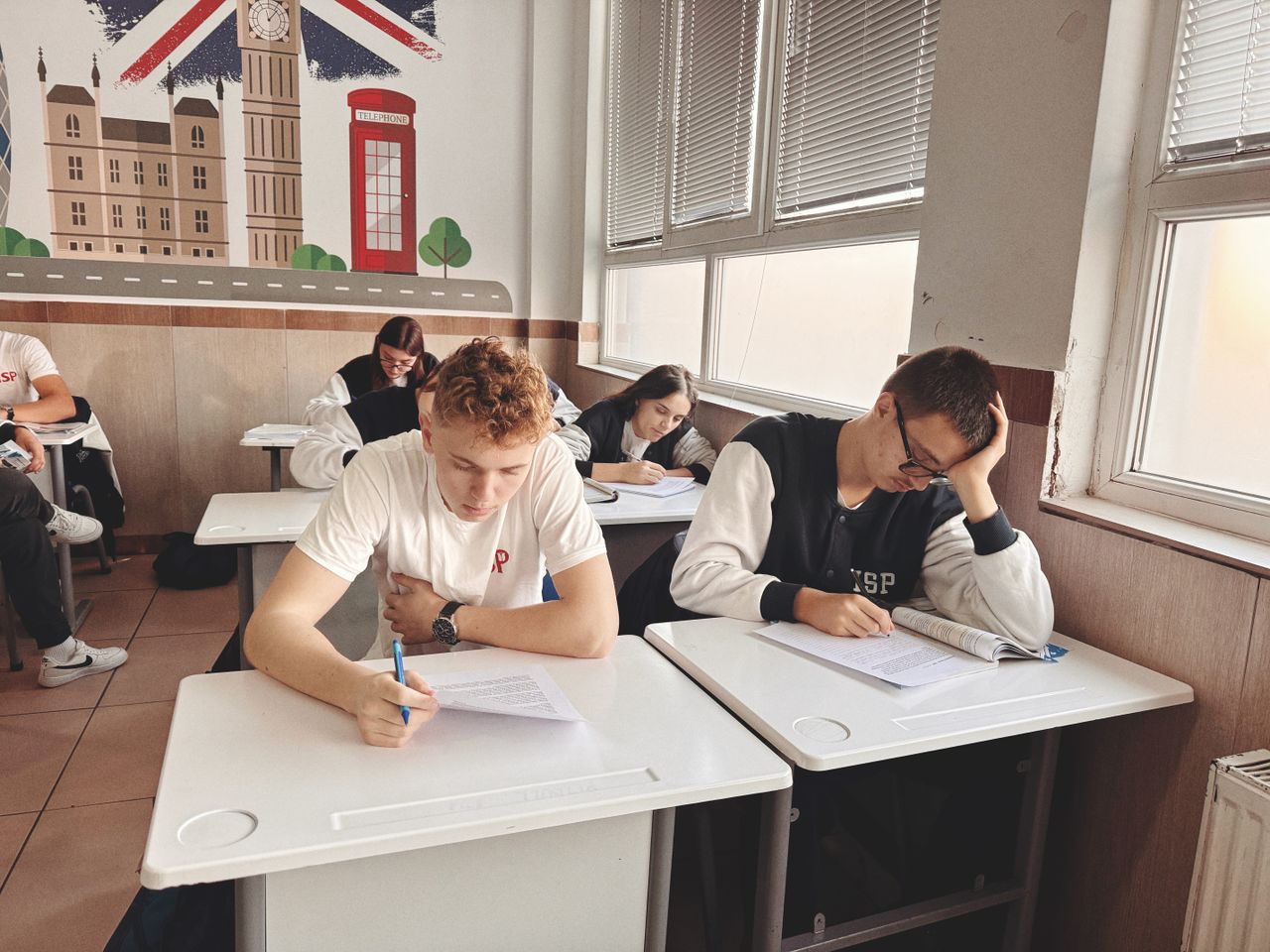
Nowhere is this more evident than in England’s schools. The children filling classrooms in 2026 will be the voters, workers and parents of the 2060s. The latest statistics from the Department for Education show a country being remade from the bottom up. White British pupils now account for less than 60% of the state-school population, down from around 70% in the 2010s and roughly 90% in the 1990s. In about a quarter of England’s schools, White British pupils are already a minority; in 72 schools there is not a single White British pupil. In areas such as Luton, Coventry, Slough, Wolverhampton, and parts of Birmingham and Bradford, White British children account for only around 10% of nursery pupils, or even fewer.
Independent researcher Charlie Cole has analysed the figures by constituency. In East Ham, just 2% of pupils are White British. You can check the figures for your own area here.
Some politicians cast doubt on whether any of this matters. They will be long gone, so why should they care what sort of country their children and grandchildren inherit? The assumption appears to be that this is a theoretical problem that will be borne by someone else. Yet demographic change, and the policies required to manage it, are already reshaping British schools and the way they are run.
Disorder in schools is increasing. Permanent exclusions have risen by 21% since 2019, while 37% of teachers report having been physically assaulted in the past 12 months. One incident involved a heavily pregnant teacher being struck by a chair. Four other attacks on teachers resulted in amputations. Yet even as violence rises, schools face growing pressure to avoid disciplining pupils from certain backgrounds. Activists are increasingly quick to claim that minority pupils are punished simply for expressing “their cultural values and norms” in schools supposedly “rooted in white culture”.
Some argue that the breakdown in discipline can be managed, pointing to schools such as Michaela Community School in north-west London. It is diverse, disciplined, academically successful and, for many, living proof that multiculturalism works. Yet admirable and impressive though Michaela’s achievements undoubtedly are, one wonders whether Katharine Birbalsingh’s methods would be acceptable to most parents. They include mandatory vegetarian meals to accommodate a range of religious dietary requirements; pupils moving between lessons in silence under close supervision; and a ban on groups of more than four pupils gathering together in order to reduce “social exclusion“.
If this is what it takes to hold a multi-ethnic school together, perhaps the lesson is less reassuring than its advocates assume.
What would such a model look like if applied to the nation as a whole? Fragmented communities held together by an increasingly censorious, interventionist and managerial state, regulating what people eat, what they say and even with whom they may associate.
There is, however, another vision: a society built on good manners, civility, mutual respect, respect for the law, loyalty, patriotism, religious freedom and free speech. In other words, an education system and a society grounded in the ethos and values upon which Britain was built.
We, along with what is undoubtedly the vast majority of native British citizens – still by far the largest segment of the population – would much rather see a sharp reduction in both immigration, which remains at more than 800,000 a year, and net migration, which stood at over 170,000 in 2025. Both must be sharply reduced.
At the same time, we must put in place a process for the assimilation of recent and future arrivals into the society they have chosen to join. It is time to abandon the divisive doctrine of multiculturalism and challenge the absurd claim that ever-increasing diversity is our strength. It is not. It is a profound weakness that is leading to the growing fragmentation of what was once a cohesive and unified society.